
With the southwest monsoon stalled over southern Maharashtra, India is facing a nationwide rainfall deficit of 41 percent between June 4 and June 18, according to the latest India meteorological department (IMD) data.
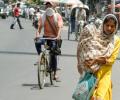
Uttar Pradesh is experiencing an intense heatwave, with Banda recording the highest temperature at 47.6 degrees Celsius. The IMD has issued a 'Red Colour Warning' for severe heatwave conditions. The extreme heat is disrupting daily life and economic activity, prompting government action to prevent heat-related illnesses.

Authorities on Sunday temporarily suspended the Amarnath Yatra in Kashmir as well as the pilgrimages to the Mata Vaishno Devi and Shiv Khori shrines in Jammu after the India meteorological department (IMD) forecast of widespread rainfall across the Union Territory over the next few days.

A landslide in Maval tehsil, Pune district, has buried a house, with three family members feared trapped. Rescue operations are underway by NDRF and police, while heavy rainfall has also caused waterlogging and partial closure of the Mumbai-Pune Expressway.

Water levels were even lower than the 10-year average in 27 reservoirs in eastern India and around 47 in southern India.

Several parts of India are experiencing a severe heatwave, with temperatures soaring past 44 degrees Celsius. States are issuing alerts and taking measures to protect people and animals from the extreme conditions.

Kerala's Wayanad district is under a red alert due to very heavy rainfall and a landslide at the Kalladi tunnel project site, resulting in one confirmed death, seven hospitalised, and seven missing. Neighbouring Kozhikode is also under a red alert, with orange alerts for other districts. Evacuation efforts are underway, and the landslide pushed a bus into a river.

Indian benchmark stock indices, Sensex and Nifty, experienced a significant decline for the third consecutive day, with the Sensex tumbling 1,092 points and Nifty closing below 24,550. This downturn was primarily driven by the India Meteorological Department's forecast of a below-normal southwest monsoon and ongoing geopolitical uncertainties surrounding the US-Iran ceasefire arrangement.

Olympian and World Cup gold medallist archer Jayanta Talukdar and his one-month-old twin babies were rescued from their flood-hit apartment in Guwahati's Rukmininagar on Friday.

Heavy monsoon rains have caused widespread havoc across Arunachal Pradesh, leading to floods, landslides, and significant damage to infrastructure. Rescue operations are underway in multiple districts, with casualties reported and many displaced. Connectivity remains severely disrupted, and authorities have issued warnings as more heavy rainfall is forecast.

Climate experts explain how El Nino and climate change are intricately linked, with El Nino delaying monsoon onset and climate change intensifying rainfall. This new reality is altering the Indian monsoon's behaviour, leading to short-duration, high-intensity rain spells, especially in western and northwestern regions.

The India Meteorological Department has issued a 'red' alert for Mumbai, Thane, and Raigad districts, forecasting heavy to very heavy rainfall and strong winds. Residents are advised to avoid unnecessary travel, and warnings include potential flash floods, structural damage, and disruptions to essential services. The Brihanmumbai Municipal Corporation has also urged caution and deployed officials to monitor the situation.

Most north Indian states reported below-normal temperatures on Monday, with rain and thunderstorms lashing parts of Uttar Pradesh, Rajasthan, and Himachal Pradesh. The southwest monsoon is expected to arrive in Kerala in the next two to three days.

Union Minister Jitendra Singh launched two advanced weather forecast products developed under the Ministry of Earth Sciences (MoES), aimed at delivering hyper-local, impact-based and artificial intelligence (AI)-driven weather services across India.

S&P Global Ratings projects India's economic growth to slow to 6.6 per cent in FY27, down from 7.7 per cent in FY26, citing energy stress and a potential sub-par monsoon.

Commerce Minister Piyush Goyal announced that the legal scrubbing of the India-EU Free Trade Agreement (FTA) text is expected to be completed within 10-12 days, with the final deal anticipated to be signed by December 31.

India's peak power demand reached an all-time high of 257.37 GW on Monday, driven by increased use of cooling appliances during an intense heatwave, according to power ministry data. The Indian Meteorological Department has forecast continued heatwave conditions in northwest and central India.

Dilip Buildcon Ltd, the contractor for the Anakkampoyil-Kalladi-Meppadi road tunnel project in Wayanad, attributed a recent fatal landslide to exceptionally heavy rainfall. The company stated that the project adheres to all safety and environmental protocols, despite allegations from Kerala Ministers of a "man-made disaster."

Monsoon rains have unleashed widespread destruction across India, claiming seven lives in Himachal Pradesh and Karnataka due to landslides and floods, while heavy downpours have disrupted normal life and triggered red alerts in Maharashtra and other regions.

Several districts in central and south Gujarat received heavy rainfall on Friday with over 1,500 persons evacuated to safer places in Surat which is the worst-affected, officials said.

The monthly average rainfall over India is expected to be below normal during July, the India Meteorological Department said on Tuesday in its monthly forecast.

India's hydropower generation has been significantly constrained in July due to the El Nio effect, which has weakened the southwest monsoon and reduced reservoir levels. This decline, following a 21 per cent year-on-year drop in June 2026, is forcing greater reliance on coal generation and straining grid flexibility amidst rising power demand.

After a subdued start, the southwest monsoon has gathered pace since the beginning of July, narrowing the cumulative rainfall deficit from nearly 30 per cent on June 30 to around 15 per cent as of July 8.

The India Meteorological Department has issued a red alert for Mumbai, forecasting extremely heavy rainfall and gusty winds over the weekend. The city has already experienced over 100 mm of rain in the last 24 hours, leading to delays in local train services, though public transport remains operational.

A new report by child rights NGO CRY reveals that nearly seven in every 10 school-going children across India missed school or routine activities from May to June this year due to extreme heat, with 76 per cent reporting negative impacts on their ability to focus on studies.
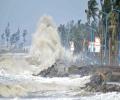
The India Meteorological Department (IMD) has announced that conditions are becoming favourable for the onset of the southwest monsoon over parts of the south Bay of Bengal, Andaman Sea, and Andaman and Nicobar Islands towards the end of this week.

The Centre has reviewed the monsoon situation, noting a reduced rainfall deficit and ongoing preparedness for the kharif season amidst El Nino concerns. A high-level meeting chaired by the Principal Secretary to the Prime Minister discussed measures across various sectors, emphasising continuous monitoring and coordinated action to mitigate potential impacts on agriculture, water resources, and essential commodities.

The heavy rains that have battered Kerala since August 1 have claimed 25 lives, left four people missing, injured 10 and damaged hundreds of properties, forcing thousands to seek shelter in relief camps, the state government said on Tuesday.

Mumbai is experiencing intense monsoon activity, with over 100 mm of rainfall recorded in 24 hours, leading to widespread waterlogging and two tragic rain-related deaths, as the India Meteorological Department forecasts continued heavy to very heavy showers and gusty winds.

Kerala Chief Minister V D Satheesan on Sunday said that eight people have died, an equal number are missing and 13 were injured in the previous day's heavy rains which caused property damage, landslides and waterlogging in many parts of the state.

The death toll from devastating flash floods in Nepal has surged to 1,050, with nearly 4,000 people, including foreigners and security personnel, still missing. Rescuers are struggling with intermittent rainfall, rising river levels, and difficult terrain, while expert teams from India and China assist in operations, particularly at hydropower project sites where many workers are believed to be trapped in tunnels.

India is likely to witness a mixed temperature pattern along with wetter-than-usual conditions in May, with the India Meteorological Department (IMD) indicating that rainfall across the country is "most likely to be above normal" at over 110 per cent of the long period average (LPA).

Following Jharkhand Chief Minister Hemant Soren's decision to cancel the JSSC-CGL exam and other recruitment tests due to alleged irregularities, approximately 2,000 successful candidates now fear losing their jobs, demanding a CBI probe and a fair opportunity to defend themselves.

Researchers at IIT Bombay have discovered that heatwaves in the Indo-Gangetic Plains are primarily caused by local land and weather conditions, rather than hot air originating from elsewhere, emphasising the need for location-specific early warning systems.

The IMD has issued an orange alert for heatwave conditions in parts of Kerala, prompting authorities to urge caution. Maximum temperatures are expected to reach up to 41 degrees Celsius in some districts. Strict guidelines have been issued, including the suspension of vacation classes and rescheduling of working hours.

The Brihanmumbai Municipal Corporation (BMC) has announced a 10 per cent water cut across Mumbai starting May 15, citing concerns over a below-normal monsoon forecast due to the El Nino weather pattern. The current water stock in the city's seven lakes is expected to last until July 6.

Kerala Chief Minister V D Satheesan announced that the death toll from rain-related incidents has reached 15, with seven people still missing. He confirmed that the overall situation is under control, except for a few areas in Pathanamthitta, as the state intensifies rescue and relief operations. The CM detailed the deployment of rescue teams, functioning relief camps, and immediate compensation measures for victims and affected families, while also cautioning against rumours regarding dam water release.

Gujarat has reported 35 rain-related deaths in the past two days, primarily in the worst-affected districts of Valsad and Navsari, as floodwaters recede and authorities initiate damage assessment surveys and post-flood cleanliness drives.

A new study indicates that India's monsoon season could experience a significant increase in uncompensable heat stress under a 2 degrees Celsius global warming scenario, extending the duration of extreme heat conditions.

Mumbai and Pune are grappling with severe monsoon weather, triggering an 'orange' alert, widespread disruptions, school closures, and tragic fatalities from landslides and wall collapses.
